


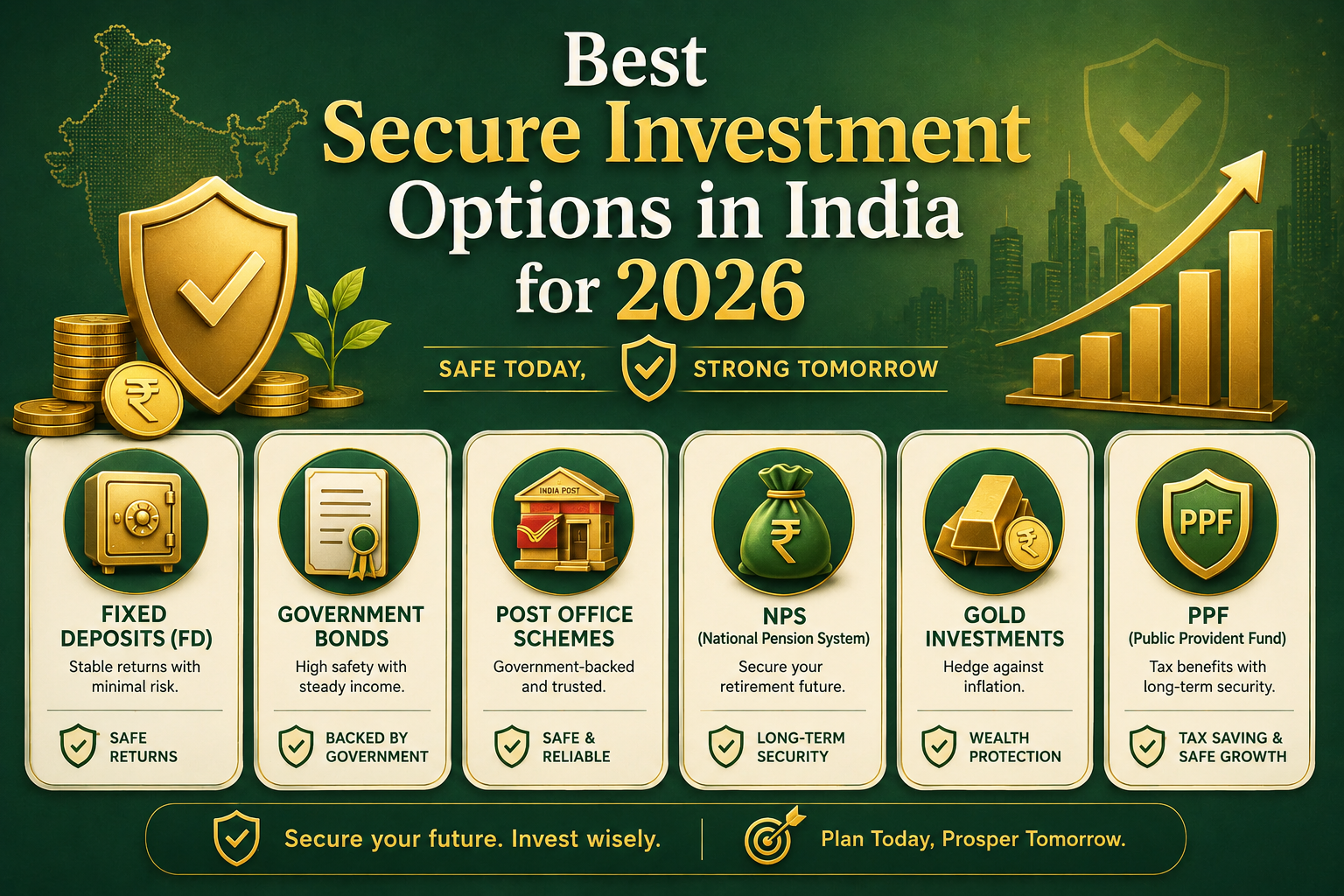
In 2026, with India’s economy showing strong resilience and growth projections around 8%, finding secure investment options in India is more important than ever. Whether you’re a beginner investor, a family planner, or preparing for retirement, the top choices balance safety, returns, and tax benefits.
Direct Answer: The safest investments include government-backed schemes like Public Provident Fund (PPF at ~7.1%), National Savings Certificate (NSC at ~7.7%), Sukanya Samriddhi Yojana (SSY at 8.2%), fixed deposits (FDs), National Pension System (NPS), and diversified debt/hybrid mutual funds. For beginners, start with index funds or large-cap best mutual funds for beginners India. Combine these with comprehensive health insurance in Chandigarh for full protection.
This guide follows E-E-A-T principles with insights drawn from current government rates, SEBI-regulated products, and real investor experiences.
Why Secure Investments Matter in 2026
Inflation, market volatility, and rising healthcare costs make capital preservation key. Government schemes offer zero default risk, while regulated options like high-rated bonds and mutual funds provide better inflation-beating potential with moderate risk.
Expert Insight: “Diversification across government schemes and low-risk funds helps mitigate risks while aiming for 7-12%+ returns depending on horizon,” notes certified financial planners.
Top Secure Investment Options in India for 2026
1. Government-Backed Small Savings Schemes (Safest Tier)
These are ideal for risk-averse investors.
- Public Provident Fund (PPF): 7.1% p.a., 15-year tenure, tax-free (EEE status), Section 80C benefit up to ₹1.5 lakh. Excellent for long-term goals.
- National Savings Certificate (NSC): 7.7% for 5 years, taxable interest but deductible under 80C.
- Sukanya Samriddhi Yojana (SSY): 8.2% for girl child, partial withdrawal allowed after age 18.
- Senior Citizens Savings Scheme (SCSS): 8.2% for those 60+, quarterly payouts.
Real-Life Example: A Chandigarh family used SSY for their daughter’s education, growing ₹1.5 lakh annual deposits steadily with tax benefits.
2. Fixed Deposits and Corporate Bonds
- Bank FDs from RBI-insured banks (up to ₹5 lakh per depositor) offer 6-8%+ depending on tenure.
- High-rated corporate bonds and AAA-rated options provide slightly higher yields with good safety.
Comparison Table:
| Option | Interest Rate (2026) | Tenure | Risk Level | Tax Benefit |
|---|---|---|---|---|
| PPF | 7.1% | 15 yrs | Zero | EEE + 80C |
| NSC | 7.7% | 5 yrs | Zero | 80C |
| SSY | 8.2% | 21 yrs | Zero | 80C |
| Bank FD | 6-8% | Flexible | Very Low | TDS applicable |
| Debt Mutual Funds | 6-8%+ | Varies | Low | Indexation benefits |
3. National Pension System (NPS)
Government-regulated, market-linked with equity/debt mix. Tier-I offers tax benefits under 80C and additional 80CCD(1B). Suitable for retirement; partial withdrawals allowed.
4. Best Mutual Funds for Beginners India
For slightly higher growth with managed risk:
- Large-cap or Index Funds: Lower volatility.
- ELSS Funds: Tax-saving with equity exposure (e.g., SBI Long-Term Equity, HDFC ELSS).
- Start SIPs with ₹500-1000/month for rupee-cost averaging.
Tip for Beginners: Choose funds from established AMCs like HDFC, SBI, or ICICI Prudential. Review past performance, expense ratios, and fund manager track record.
5. Gold ETFs and Sovereign Gold Bonds
Hedge against inflation. SGBs offer 2.5% interest + gold price appreciation, tax-free on maturity.
Health Insurance in Chandigarh: Essential Protection Layer
No investment plan is complete without risk cover. Health insurance in Chandigarh protects against medical emergencies that could derail savings.
Top plans offer cashless hospitalization at local networks (e.g., PGIMER, Fortis). Look for family floaters, unlimited sum insured restore, and critical illness cover.
Recommendation: Consult the best insurance agent in Chandigarh for personalized comparison across providers like ManipalCigna, Star Health, or HDFC ERGO. Local experts help navigate claims and customize policies for Chandigarh residents.
Building a Balanced Portfolio
For Beginners:
- Emergency fund in liquid FDs/savings (3-6 months expenses).
- 50-60% in PPF/NSC/SSY.
- 20-30% in NPS or debt funds.
- 10-20% in equity mutual funds via SIP.
- Adequate health insurance and term life cover.
Expert Tip: Rebalance annually. A real investor in Chandigarh diversified into PPF and beginner mutual funds, achieving steady 8-10% growth while sleeping peacefully.
Conclusion: Secure Your Future Today
The best secure investment options in India for 2026 emphasize government safety nets, tax efficiency, and gradual equity exposure. Prioritize safety first, then growth.
Key Takeaways:
- Government schemes for zero-risk core.
- Mutual funds for beginners to beat inflation.
- Integrate health insurance in Chandigarh early.
- Seek guidance from trusted advisors like the best insurance agent in Chandigarh.
CTA: Assess your goals today. Contact a certified financial advisor or local expert in Chandigarh for a free portfolio review. Start your SIP or open a PPF account this quarter—your future self will thank you!
FAQs (People Also Ask)
1. What are the safest investment options in India for 2026?
PPF, NSC, SSY, and insured FDs are among the safest due to government backing.
2. Which are the best mutual funds for beginners in India?
Large-cap index funds, ELSS like SBI or HDFC options, and flexi-cap funds via SIPs. Start small and focus on long-term.
3. How to get the best health insurance in Chandigarh?
Compare plans online and consult the best insurance agent in Chandigarh for tailored family or individual coverage with good network hospitals.
4. Is NPS better than PPF for retirement?
NPS offers market-linked growth potential with tax benefits; PPF is fixed and tax-free. Many use both.
5. What is the current PPF interest rate in 2026?
Approximately 7.1% p.a., reviewed quarterly.
6. Should I invest in FDs or mutual funds in 2026?
FDs for absolute safety; debt/hybrid mutual funds for better post-tax returns.
7. How can I find the best insurance agent in Chandigarh?
Look for IRDAI-licensed professionals with strong claim settlement records and positive local reviews.
Disclaimer: This is for informational purposes. Investment involves risks; consult a qualified advisor. Rates as of mid-2026.